
Dhootapapeshwar App is LIVE!
Download & Signup, to get SDL Points.

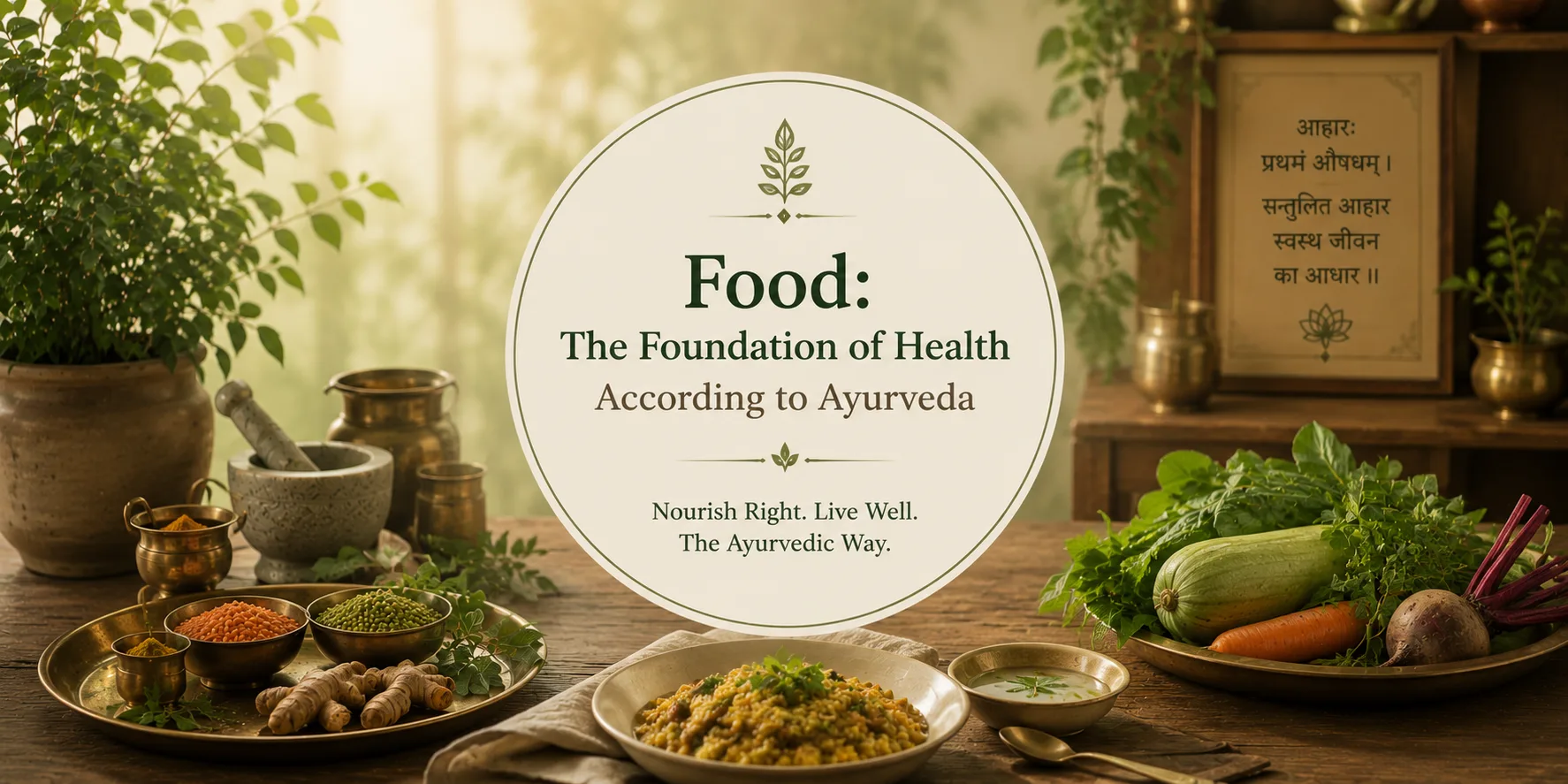
Food is an essential part of our lives and one of our most
basic needs. Today, not only adults but even children have become increasingly
health-conscious. Schools teach them the importance of healthy eating from an
early age, and sometimes they even advise their elders with innocent remarks
such as, “Don’t eat street food” or “Avoid cold water.” While their childlike
wisdom often brings a smile to our faces, it is also reassuring to know that
awareness about healthy habits is developing at a young age.
However, creating awareness is only the first step;
sustaining these habits is a collective responsibility. Healthy eating should
not remain merely a concept in textbooks—it should become a way of life.
Families, relatives, and communities must actively support and encourage
healthy dietary practices. In this journey, Ayurveda stands as a guiding light,
offering timeless wisdom on nutrition and well-being.
In fact, food and nutrition are among Ayurveda’s greatest
strengths. Its principles have stood the test of time because they are rooted
in careful observation, logic, and a deep understanding of human health.
Ayurveda’s approach to nutrition is not based solely on taste but on long-term
well-being. It is, in many ways, an ancient science of food designed to promote
health, balance, and longevity.
Let us explore some fascinating and practical Ayurvedic
insights about food.
1. Digestion Comes First: Understanding Your Agni
Ayurveda emphasizes that before deciding what to eat
or how much to eat, one must first understand their digestive power,
known as Agni. The strength of your digestion determines how effectively
your body can process food.
A simple Ayurvedic principle is:
“Look at your own plate; there is no need to compare it with
someone else’s.”
This wisdom is particularly relevant in buffet-style dining.
Many of us tend to fill our plates simply because we see others doing the same,
often taking more food than we need and ultimately wasting it. The advantage of
a buffet is that it allows us to choose what and how much we truly need.
Ayurveda encourages mindful eating rather than overeating out of temptation or
comparison.
The information shared in these blogs is for educational and informational purposes only and is based on Ayurvedic principles and the professional experience of the author. It is not intended to replace professional medical advice, diagnosis, or treatment. Please consult a qualified healthcare professional before making any health-related decisions. The author and website are not responsible for any outcomes resulting from the use of this information.
If you receive any unauthorised, suspicious or fraudulent offers or interview call or in case of any queries, please email us at healthcare@sdlindia.com
The original version of this article is published in English. Translations into other languages are provided solely as an additional bilingual support to enhance accessibility and convenience for readers.
While reasonable efforts have been made to provide accurate translations, these are generated using automated translation tools and may contain inaccuracies, omissions, or differences in interpretation. In the event of any discrepancy or inconsistency, the English version shall prevail and be considered the official and authoritative version.
The Company does not warrant or guarantee the accuracy, completeness, or reliability of the translated content and shall not be held responsible or liable for any errors, omissions, or consequences arising from reliance on the translated information.